Maheshwar Hari Tripathi
Open to select work 21:00 IST · Portfolio 2026
About Kaushambi, Uttar Pradesh Class 11

Sixteen, building after school.

I'm Maheshwar Hari Tripathi. I live in Kaushambi, a district in Uttar Pradesh, and I build software on a laptop that has seen better days.

The short version

01

Most of what I make starts with an annoyance. A music player full of ads. A YouTube Shorts feed that won't stop. An eye that closes at 2 a.m. while I'm studying. I build the smallest thing that removes the annoyance, then keep going until it feels finished.

I work across Android, the web, desktop and small AI models. I don't have a team, a funding round or a design department. I have a phone, a laptop, and a lot of evenings after school.

Everything in the archive is a real build with real limits — recorded honestly, including the parts that don't work yet.
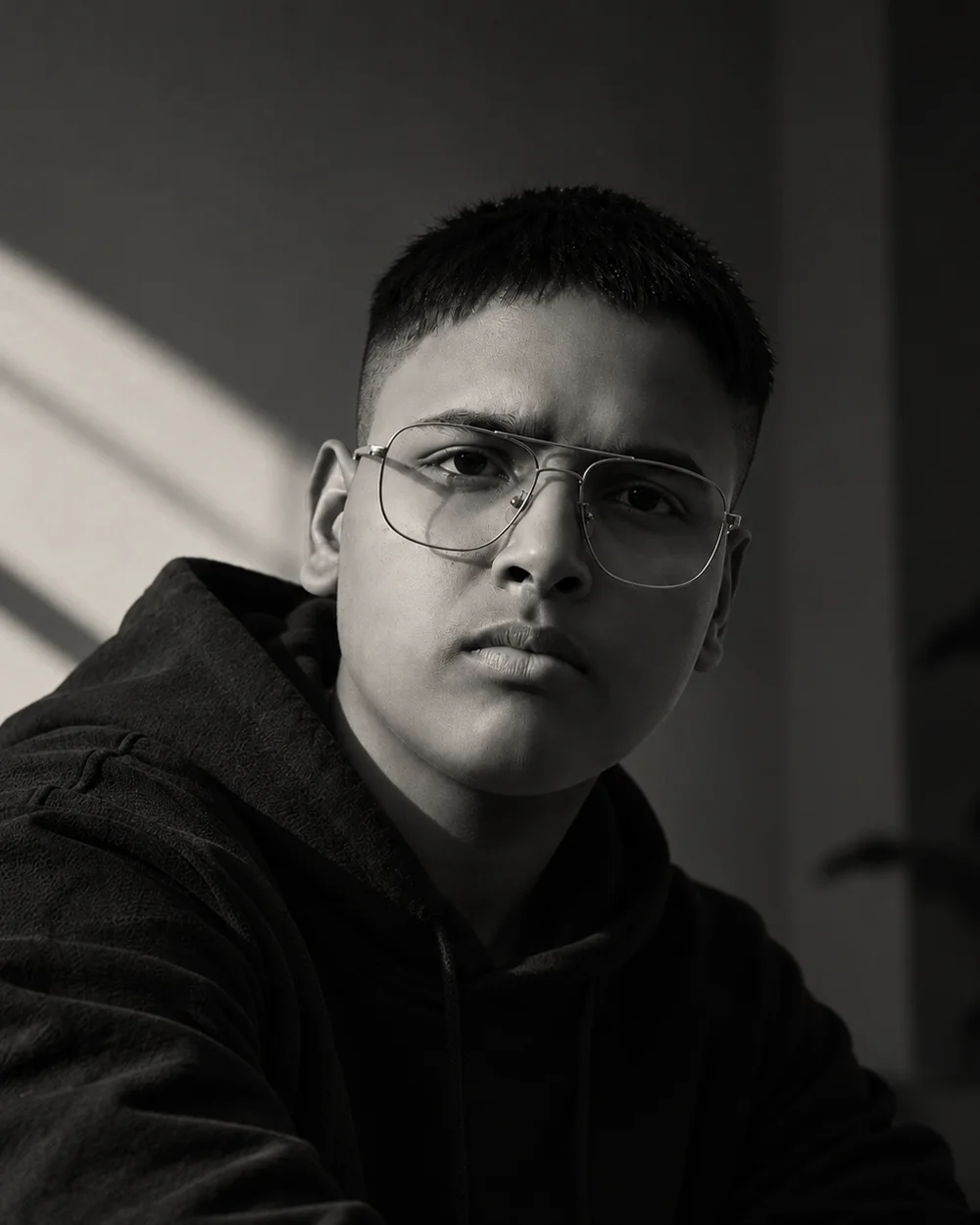
Maheshwar in a dark hoodie, lit from the side

A few frames

02
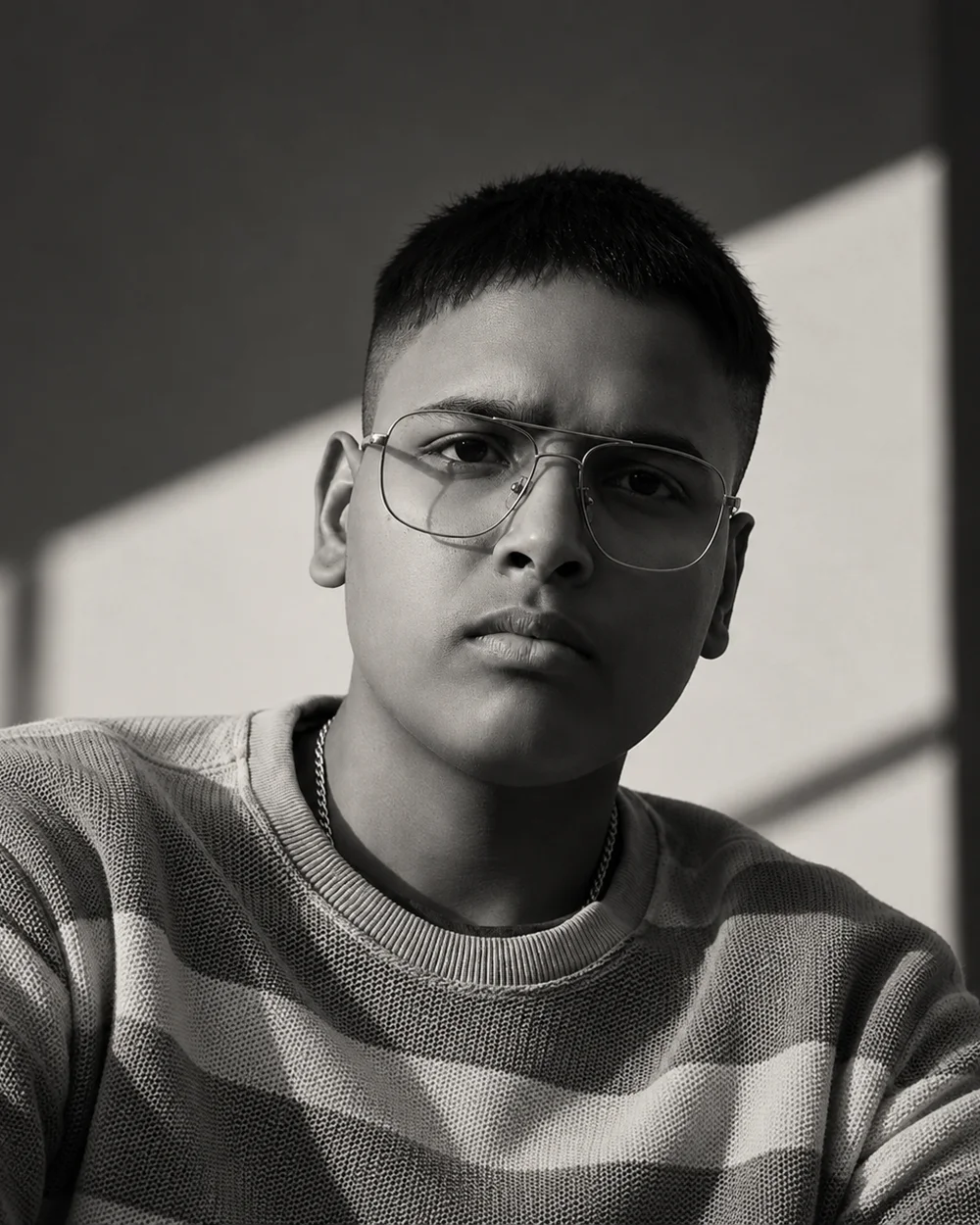
Maheshwar in geometric window light
01 — Window lightKaushambi, 2026
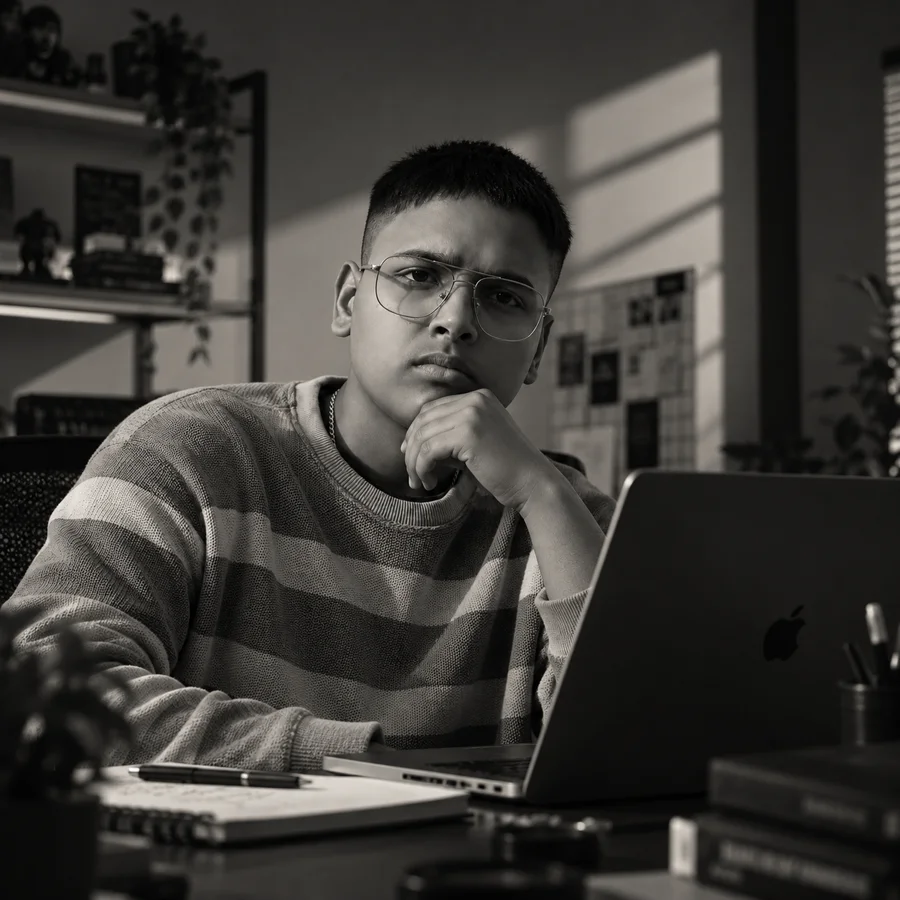
Maheshwar working at his laptop after school
02 — After schoolKaushambi, 2026
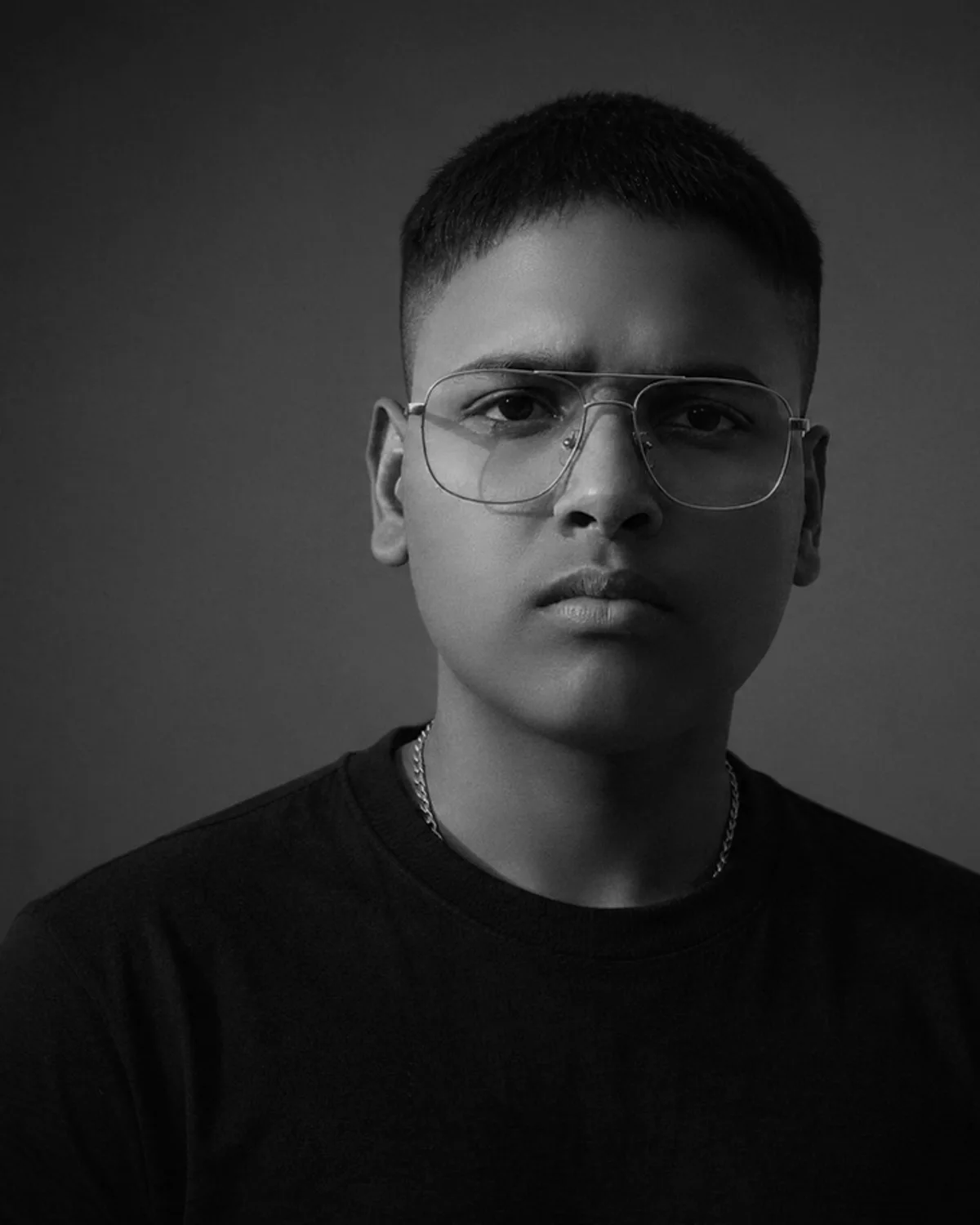
Maheshwar in the studio, portrait
03 — StudioKaushambi, 2026

How I got here

03
2025
Wrote my first real programs, made a GitHub account, and started turning small annoyances into tools. The first public project was a Chrome extension for YouTube Shorts.
2025
Built Chaksu, an eye-closure detector in Python and OpenCV, after falling asleep at my desk one too many times. Learned that computer vision is mostly debugging lighting.
2025—26
Started VYAAS, a voice assistant that connects hosted models, local models, speech-to-text and Hindi text-to-speech into one pipeline. It is still the project I keep returning to.
2026
Built the Swarna family: SwarnaSabd for refining text with local LLMs, SwarnaVani for Hindi-first voice on Android, and a set of smaller Android and desktop tools.
2026
Class 11 at St. Joseph's School, Kazipur. Rebuilding this portfolio as an archive instead of a landing page.

Four rules I actually use

04

01 — Solve my own annoyance first

If I don't want the thing, I probably won't finish it. Every project in the archive began as a problem I had.

02 — Ship something that runs

A rough build that works beats a beautiful plan. I would rather document a limitation than hide it.

03 — Name the constraint

Old phone, slow internet, no budget, school at 7 a.m. Constraints decide the architecture more than trends do.

04 — Keep private things private

Voice audio and personal text stay on-device where possible. If data leaves the device, the project page says so.

What I can actually use

05
Languages
JavaScript / TypeScript, Python, Kotlin, C++, HTML/CSS, SQL. Working knowledge of Rust.
Mobile
Android SDK, Kotlin, Jetpack Compose, Capacitor, foreground services, accessibility and overlay APIs.
Web
Next.js, React, Vite, Node.js, Express, static sites, responsive layout, accessibility basics.
AI & data
OpenRouter, Ollama and GGUF models, LiveKit, Sarvam TTS, OpenCV, MediaPipe, prompt and pipeline design.
Backend & storage
Supabase, Firebase Auth, SQLite, REST APIs, simple Node proxies, local-first storage.
Tools
Git and GitHub, VS Code, Android Studio, Figma, Windows and Linux, Chrome DevTools.

The boring details

06
Hardware
A Windows laptop, a mid-range Android phone, an Arduino Uno and a box of servo motors. No GPU, which is why so many projects start with “can this run on CPU?”
Software
VS Code, Android Studio, Ollama for local models, Git and GitHub. Chrome DevTools for anything that runs in a browser.
Off-screen
Class 11, robotics club experiments, and reading about interfaces that don't need a manual. I play badminton badly.